02 November
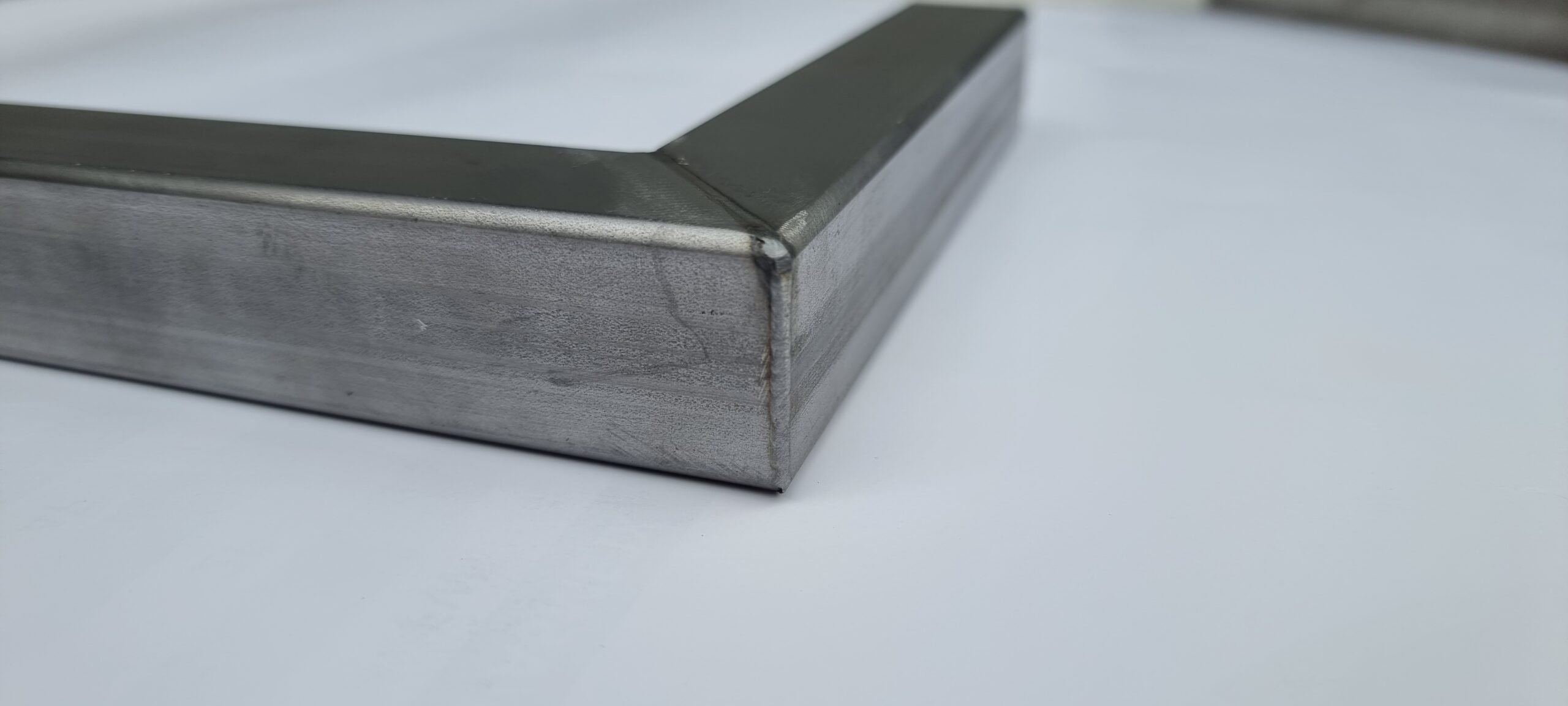
Three parameters that have the most influence on the weld result
A modern handheld laser welder has various adjustable parameters: wobble width, focus position, pulse frequency, duty cycle, gas flow rate, shielding gas type, wire feed speed and more. For someone who is just starting out with laser welding, that can be overwhelming. In practice, three parameters together determine the vast majority of the weld result: the laser power, the welding speed and the wobble. With a good understanding of these three parameters, a welder has the most important variables of the process under control.
The laser power
The laser power, expressed in watts or kilowatts, determines how much energy the laser delivers per unit of time. A higher power means more energy per unit of time, which results in deeper penetration, a wider fusion zone and the possibility of working at higher welding speeds. A lower power gives less heat input and is favourable for thin-walled material or for applications where distortion is critical. However, the power never stands on its own. The same power gives a different result at a low welding speed than at a high welding speed.
The welding speed
The welding speed, expressed in mm/min, determines how fast the welding head moves across the workpiece. Together with the power, the welding speed determines the heat input: the energy that is introduced per millimetre of seam. In manual laser welding with filler wire, the welder in practice follows the speed of the welding wire: the welding head is, as it were, pushed forward by the wire. As a result, the travel speed is automatically very constant. The effect of the speed on the seam is as follows:
- Lower speed: the laser stays longer in the same spot. That gives more penetration, but also more heat input and therefore a greater chance of distortion or discolouration.
- Higher speed: less heat input and less distortion. This is favourable for thin-walled material.
The relationship between power and speed can be illustrated well with the formula for heat input:
Heat input (kJ/mm) = (Power (kW) × 60) / Welding speed (mm/min)
Wobble width
The wobble width is the third parameter that determines the weld result to a high degree.
The width (also called oscillation amplitude) determines how far the laser beam moves sideways back and forth. In manual laser welding the focus position is fixed: it is set to the working distance of the welding head and is not adjusted during welding. The wobble width thereby determines the size of the weld pool.
A wider wobble spreads the energy of the laser beam over a larger seam surface. This has direct consequences for both the seam geometry and the required power. As the wobble width increases, the energy density per unit of area decreases. To maintain the same penetration depth with a wider wobble, more power is needed. The wobble width and the power must therefore be matched to each other: a wider wobble requires more power, a narrower wobble requires less.
The ideal wobble setting depends on the type of seam. That is because the shape of the joint determines how the energy is distributed over the walls.
Outside corner and lap seam: Here a wider wobble is favourable. The beam reaches both sides of the seam, gives good penetration in both surfaces and produces a wider, more even seam.
Inside corner: Here a narrower wobble works better. The walls are close together, and a wide wobble projects part of the energy onto them. That gives unnecessary heat input, spatter and a weld pool that is harder to control. With a narrower wobble the energy remains concentrated on the root area of the seam.
How the three parameters work together
Power, welding speed and wobble are strongly connected to each other. If one parameter changes, one or both of the other parameters usually also have to be adjusted. An example from practice: a welder welds an inside corner weld in 1.5 mm stainless steel with these settings:
- wobble width: narrow
- power: 600 W
- welding speed: 400 mm/min
The seam is good. Then an outside corner follows on the same material. The welder sets the wobble width wider for more even contact with both surfaces. But as a result the energy density drops and the penetration is insufficient. The solution is to increase the power slightly, or to lower the welding speed slightly, until the penetration is back to the right level.
Three parameters, one balance.
Experienced manual welders learn to sense this. Beginning manual welders learn this fastest by systematically varying one parameter at a time and observing the effect on the seam.
Other parameters
The other adjustable parameters are certainly not unimportant, but in most situations they have a more limited influence on the basic result. Gas flow rate and gas type influence oxidation and spatter formation. Focus position is set in advance to the working distance of the welding head and requires no adjustment per seam type. Pulse parameters provide extra control in specific applications. In practice it works like this: set power, speed and wobble width well and you have a usable seam. Then adjust the remaining parameters and you have a good seam. The order is not arbitrary.
In practice
Laser welding has many adjustment knobs, but three parameters carry the most weight: laser power, welding speed and wobble width. Anyone who understands what each of these three does, how they influence each other and how the wobble width differs per seam geometry has the largest part of the process under control. The rest is refinement. Would you like to know more about the settings of a handheld laser welder, or would you like to experience for yourself how this works in practice? Request a demo or get in touch via [email protected].
Deel dit bericht