24 August
Qualifying manual laser welding
What does NEN-EN ISO 15614-11 mean in practice?
Manual laser welding is increasingly being applied in the metal industry. When a qualified welding procedure is required for an application, NEN-EN ISO 15614-11 can be applied. This standard describes the qualification of welding procedures for electron beam and laser beam welding of metals. The purpose of the welding procedure test is to demonstrably establish that a welding procedure meets the specified requirements within defined conditions. For the Netherlands, NEN-EN-ISO 15614-11:2026 (Cor. 2026-05) is the current publication.
From WPS to qualified WPS
For laser beam welding, a preliminary welding procedure specification (pWPS – preliminary Welding Procedure Specification) is first drawn up in accordance with NEN-EN-ISO 15609-4. In the pWPS, the relevant data and process parameters are recorded, including the applicable tolerances. This may include, among other things:
- Material and material thickness
- Laser equipment
- Laser power
- Welding speed
- Beam and focus data
- Shielding gas
- Joint geometry and fit-up
- Welding position
- Any added material used
- Preheating
- Other relevant process parameters
A representative test piece is then welded according to the pWPS. The preparation and welding must take place under production conditions that are represented by the test piece.
When the requirements are met, the actual welding data and the results of the examinations and tests are recorded in a WPQR – Welding Procedure Qualification Record. After successful qualification, the pWPS can be qualified as a WPS – Welding Procedure Specification, within the qualification range laid down in NEN-EN ISO 15614-11.
Which examinations are required?
NEN-EN ISO 15614-11 distinguishes between quality levels B, C and D for the scope of the examinations and tests. The acceptance criteria for imperfections are linked to:
- ISO 13919-1 for steel, nickel, titanium and their alloys
- ISO 13919-2 for aluminium, magnesium and their alloys and pure copper.
Depending on this, the following examinations and tests may be applicable, among others:
- Visual testing (VT – Visual Testing)
- Penetrant testing
- Magnetic particle testing
- Radiographic testing
- Ultrasonic testing
- Tensile tests
- Bend tests
- Notch impact tests
- Hardness measurements
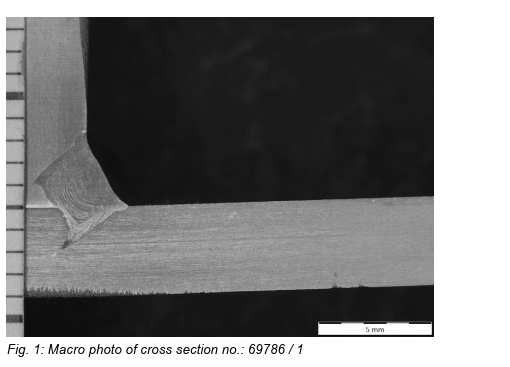
- Metallographic examination, consisting of macroscopic and, where prescribed, microscopic examination
Not all of these examinations and tests are necessary for every welding procedure qualification. EN ISO 15614-11 lays down the required scope per quality level and type of test piece. In addition, the application standard, customer specification or other regulations may impose additional requirements.
Example: Stainless Steel 316 of 2 mm
Imagine that a company wants to qualify a manual laser weld in stainless steel 316 with a material thickness of 2 mm. Based only on the material and the material thickness, it is not yet possible to determine which examinations and tests are necessary. For that, among other things, the following must also be known:
- The type of welded joint
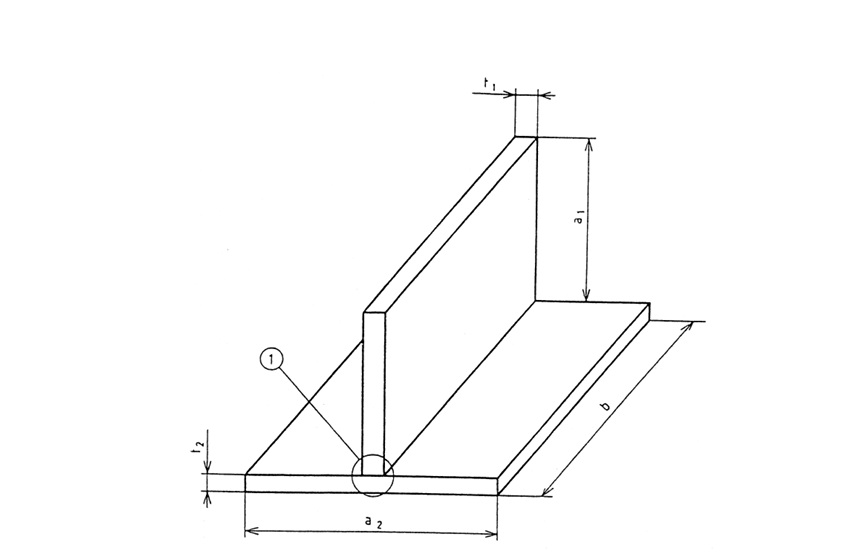
- The geometry of the test piece
- The required quality level
- The welding position
- The process parameters applied
- Any additional requirements from the product or application standard.
For stainless steel 316, the acceptance criteria for welding imperfections are established according to ISO 13919-1, quality level B, C or D. Which examinations and tests are required for the welding procedure qualification is then determined according to EN ISO 15614-11, depending on the chosen quality level and the type of test piece.
What is qualified?
NEN-EN-ISO 15614-11 describes the qualification of the welding procedure for electron beam and laser beam welding. The qualification of the welding procedure does not automatically mean that the person welding with the manual laser is also qualified. For manual or partially mechanised fusion welding of steel, the welder can, when a welder qualification is required, be separately qualified according to NEN-EN ISO 9606-1. For mechanised or automatic welding, a distinction must be made with the qualification of welding operators and welding setters. NEN-EN-ISO 14732 is the relevant standard for this. The welding procedure qualification and the qualification of the welding personnel are thus two separate parts of quality assurance.
The qualification range
A successful welding procedure test does not mean that afterwards there may be unlimited deviation from the tested conditions. NEN-EN ISO 15614-11 therefore contains a defined qualification range. This relates, among other things, to:
- The manufacturer
- The equipment used
- Clamping devices and tools
- The base material and the material group
- Dimensions and geometry
- Added materials
- Joint geometry
- Any backing
- Type of weld
- Welding position
- Welding parameters
- Preheating
- Post-weld heat treatment
- The number of weld layers or passes
When work is carried out outside the qualified range, an additional or new welding procedure qualification may be necessary.
Qualifying in practice
Manual laser welding can be incorporated into a demonstrably controlled welding process in accordance with NEN-EN ISO 15614-11. With a correctly drawn-up pWPS, a representative welding procedure test and the examinations and tests required by the standard, the welding procedure can be qualified for a defined field of application. In doing so, it is important to determine in advance which materials, material thicknesses, joints, welding positions and process parameters will actually be applied in production. Therefore, do not qualify more than necessary, but above all ensure that the qualification range matches the welding work that must be carried out in practice. Normative basis
- NEN-EN-ISO 15614-11:2026 (Cor. 2026-05) – Welding procedure testing for electron beam and laser beam welding
- ISO 15609-4:2009 – Welding procedure description for laser beam welding
- ISO 13919-1 – Quality levels for imperfections in electron beam and laser beam welds of steel, nickel, titanium and their alloys
- ISO 13919-2 – Quality levels for imperfections in electron beam and laser beam welds of aluminium, magnesium and their alloys and pure copper
- NEN-EN ISO 9606-1 – Qualification testing of welders for fusion welding of steel
- NEN-EN ISO 14732:2025 – Qualification of welding operators and welding setters for mechanised and automatic welding
Would you like this for your own welding process? At LAZRZ, we are happy to help clients further in qualifying their welding process. From drawing up the WPS up to and including the supervision of the test weld and the assessment by a recognised examiner. Do you have further questions about the qualification of your welding process? Contact us via [email protected]
Deel dit bericht